
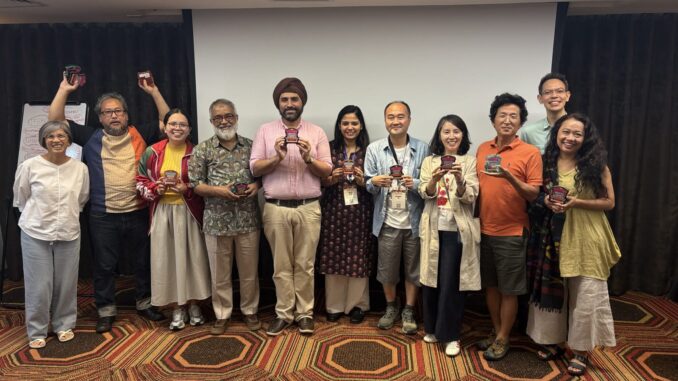
Munir Hasan from Bytesforall Bangladesh joined the APC Asia Members Meeting 2026 in Manila, Philippines from the 11th to 12th June, 2026. The gathering brought together around 50 participants from APC member organizations and partner institutions across Asia, including representatives from Bangladesh, India, Nepal, Myanmar, Thailand, the Philippines, Indonesia, Malaysia and Korea. Following report was prepared by him from the meeting venue.
The meeting followed DRAPAC (Digital Rights Asia Pacific) 2026, held from 8–10 June. Although I did not participate in DRAPAC itself, many of its outcomes shaped the discussions during the APC meeting. The opening fishbowl discussion drew heavily on issues emerging from DRAPAC and provided a useful snapshot of the challenges currently facing digital rights communities across the region.
When AI Becomes Part of Culture
One of the strongest impressions came right at the beginning of the meeting.
The fishbowl discussion did not begin with questions. Instead, participants were invited to respond to prompts.
At first, this felt like a small facilitation choice. Later, I realized it reflected a deeper shift. Artificial intelligence is no longer simply a technology that we discuss. It is increasingly shaping how we think, communicate, learn and organize ourselves. AI has started becoming part of culture.
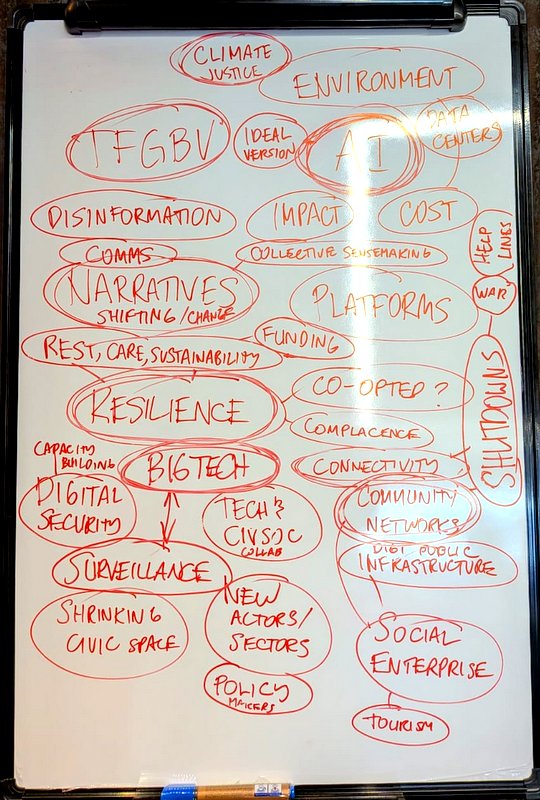
This was also reflected in the visual map created during the discussion. AI appeared at the centre of a network of interconnected issues: digital rights, climate justice, data centres, big tech, surveillance, digital security, community networks, digital public infrastructure, resilience, misinformation, narratives and social enterprise.
In other words, AI is no longer a standalone topic. It is becoming intertwined with many of the issues that civil society organizations have been working on for years.
Key Themes Emerging from Manila
Rather than focusing on individual sessions, several broad themes repeatedly surfaced throughout the meeting.
AI, Big Tech and Dependency
Participants discussed the growing influence of large technology companies on digital ecosystems worldwide.
During the discussion, I reflected on how AI adoption is already creating new forms of economic dependency in countries like Bangladesh. Increasing numbers of young people are purchasing subscriptions to AI platforms and services. This means that money is continuously flowing from countries like ours to a small number of global technology companies.
This raises important questions:
- Who benefits economically from AI?
- Who controls access?
- Who owns the underlying infrastructure?
These are no longer abstract questions. They are becoming increasingly relevant for developing countries.
AI Sovereignty
Perhaps the most important concept I encountered during the meeting was AI Sovereignty.
The discussion moved beyond access to AI tools and focused on deeper structural questions:
- Who owns the data?
- Who controls the models?
- Who controls computing infrastructure?
- Whose languages and cultures are represented?
- What happens if access to critical AI services becomes restricted?
The importance of these questions became even clearer after my return from Manila. News emerged that access to some advanced AI models remains limited outside the United States. Whether temporary or permanent, such developments illustrate how dependent many countries have become on technologies developed and controlled elsewhere.
For countries like Bangladesh, AI sovereignty may become as important as AI adoption itself.
Digital Public Infrastructure
Digital Public Infrastructure (DPI) was another recurring theme.
Participants discussed both the opportunities and challenges associated with DPI. While digital public infrastructure can improve access to services and strengthen governance, it also raises questions about privacy, accountability, inclusion and public oversight.
There was broad agreement that public-interest approaches should remain central to discussions around DPI.
Local Language and Local AI
Many conversations highlighted the importance of local languages and local knowledge systems in the age of AI.
Participants emphasized the need for:
- Local datasets
- Language annotation
- Community participation
- Open knowledge resources
- Context-sensitive AI systems
For Bangladesh, this reinforces the urgency of investing in Bangla language datasets and AI-related research.
Narratives and Information Integrity
The meeting also explored how narratives shape technology debates.
Several participants argued that discussions around AI and technology are often dominated by perspectives originating in the Global North. There was interest in developing alternative narratives grounded in local realities, local priorities and local experiences.
Related discussions touched on misinformation, journalism, content moderation and the broader challenge of maintaining information integrity in increasingly AI-mediated environments.
Care, Sustainability and Movement Building
One of the working groups focused on an issue that may initially appear unrelated to AI: care.
The group proposed a long-term initiative to better understand and strengthen organizational care practices across APC member organizations. Discussions covered psychosocial wellbeing, security, communication, learning and support systems. The goal is to develop a network-wide understanding of care and present findings at the APC Community Gathering in 2027.
This was an important reminder that movements require more than ideas, strategies and technologies. They also require sustainable organizations and healthy communities capable of supporting the people doing the work.
In a region facing increasing political, technological and social pressures, resilience is not only a technical issue. It is also a human one.
Working Group Discussions
I joined the working group focusing on AI, Big Tech and Data.
The discussion revolved around three practical questions:
- What collaborations would members like to participate in?
- What APC collaboration could strengthen ongoing work?
- How can collaboration be made more practical and feasible?
The group identified several possible areas of cooperation:
- A shared knowledge repository of reports, research and learning materials
- Regular online discussions on AI governance and AI impacts
- Capacity-building initiatives on responsible and ethical AI
- Joint learning and research activities
- Public-interest AI initiatives
- Collaborative work on AI governance and policy
- Greater civil society engagement in discussions around training data, transparency and accountability
One of the ideas I contributed to the discussion was the need for accessible resource hubs and collaborative learning spaces that can help organizations across the region better understand emerging AI issues.
The discussion demonstrated a strong desire to move beyond conversation and toward practical collaboration.
Implications for Bangladesh
The Manila discussions highlighted several areas that deserve greater attention in Bangladesh.
Immediate Priorities
- Bringing AI Sovereignty into national AI discussions
- Strengthening conversations around AI policy and governance
- Expanding discussions on AI ethics, particularly in journalism and media
- Integrating governance and sovereignty issues into AI capacity-building programmes
Medium-Term Priorities
- Building Bangla language datasets and AI resources
- Creating accessible AI resource hubs
- Expanding regional knowledge-sharing and collaboration
Long-Term Priorities
- Developing a public-interest AI ecosystem
- Strengthening Bangladesh’s digital sovereignty
- Ensuring local languages and local realities are represented in future AI systems
Conclusion
Beyond discussions about AI, digital rights and sovereignty, the meeting also reminded me of something equally important: APC is ultimately a network of people.
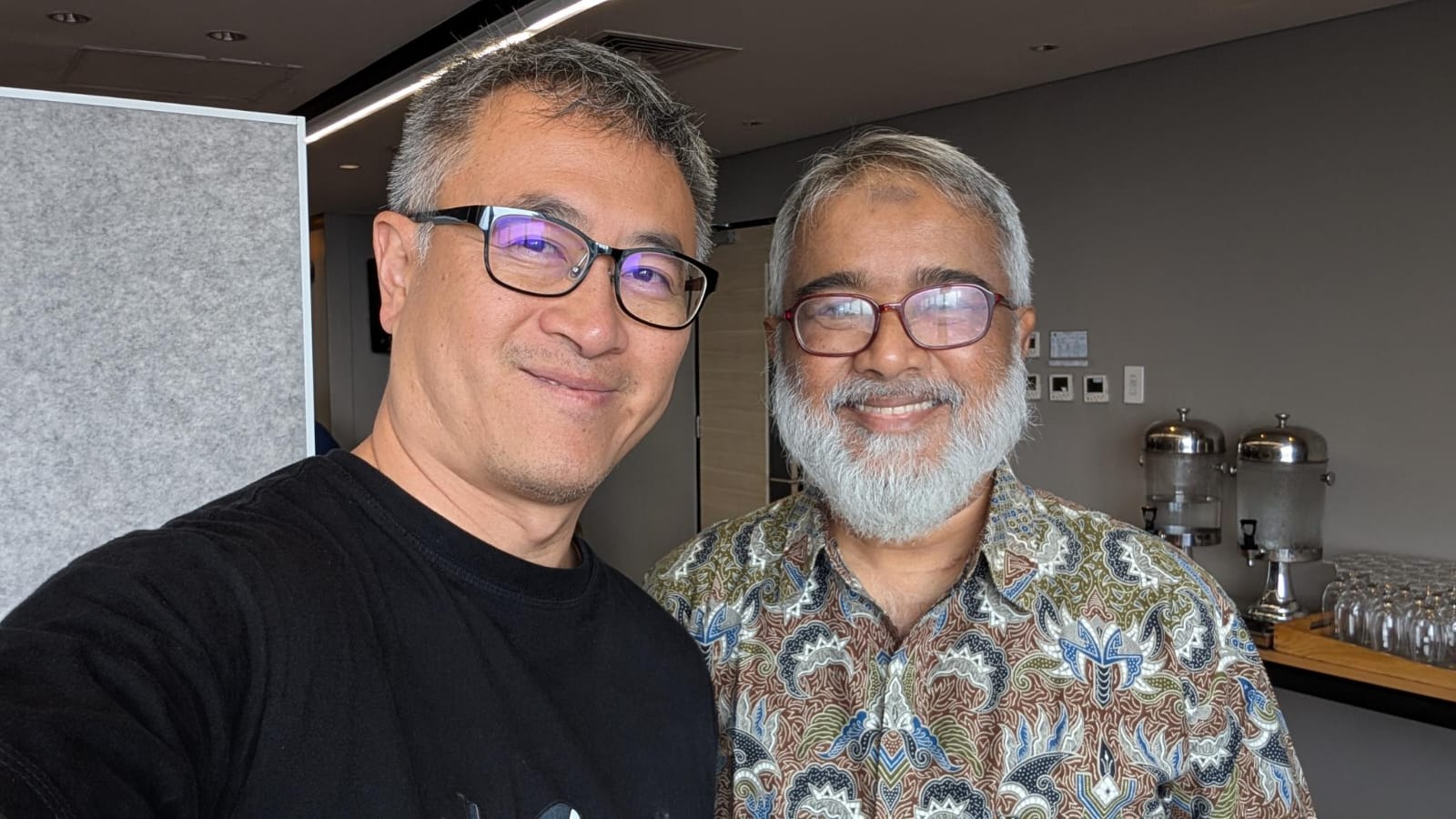
During the gathering, I had the opportunity to reconnect with Phet Sayo, whom I first knew more than two decades ago when we were both working within the UNDP ecosystem — I in Dhaka and Phet in Bangkok. Conversations like these serve as a reminder that movements are built not only through projects and policies but also through relationships that endure across time, countries and generations.
New participants continue to join the movement. New challenges continue to emerge. New ideas continue to evolve.
The conversations around AI, sovereignty and digital public infrastructure may be relatively new. The collective effort to build a more inclusive, equitable and people-centred digital future is not.
For me, Manila reinforced a simple but important lesson:
The future of AI will not be determined by technology alone. It will be shaped by rights, governance, language, infrastructure, culture and power.
And for countries like Bangladesh, the challenge is not simply how to use AI. The larger challenge is how to ensure that AI serves the public interest while strengthening our own digital and technological sovereignty.